
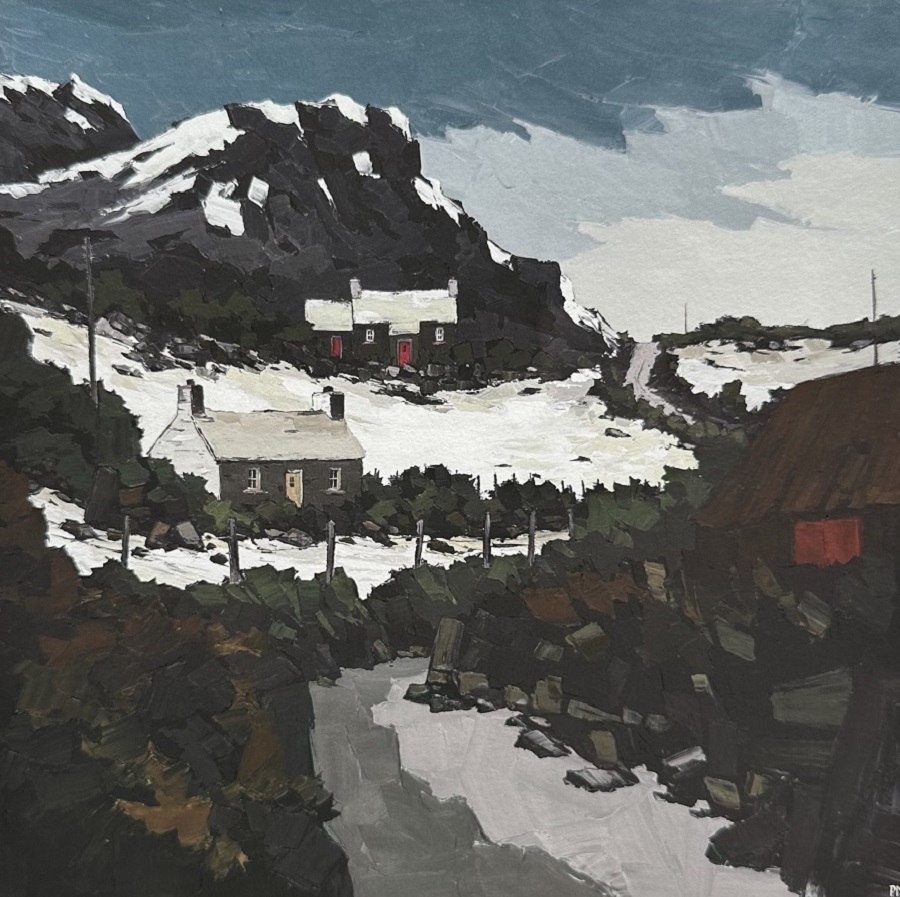
Fallen Snow on Garn Fawr
Price range: £180.00 through £250.00
Frame size: 30mm x 35mm Black Painted Hardwood
Framed Portrait size: 510mm x 530mm
Unframed Portrait size: Mounted in white card – 460mm x 480mm
213m above sea level stands Garn Fawr Mountain has been lived on for years. There are signs of Iron Age forts carved in the landscape and probably used as a lookout for any oncoming army. Garn Fawr they picked a hill that now commands a breathtaking view of the coast and the lighthouse at Strumble Head and of the flat-topped Pen Caer peninsula.
The people who constructed the fort more than 2,500 years ago made good use of the hill’s natural lines, linking its rocky outcrops with walls to form good defences, but it is still possible to make out much of the layout of its ramparts. The hill has also been used as a lookout point from World War One.
The viewpoint commands a landscape that was created by dramatic geological events more than 440 million years ago. Then volcanoes were active in the area, pushing out lava flows that cooled to form very hard igneous rocks. In some places the molten rock did not reach the surface but cooled slowly below the ground. These igneous intrusions have resisted erosion better than surrounding layers to become rocky crags.
In late summer you may hear the calls of seals. The north coast of Pembrokeshire has a large population of grey seals and in late August and September pups are born at quiet coves like Pwll Deri.
I love cut across country and head towards the Strumble Head coast because these two cottages under the fortified crags of Garn Fawr give me so much inspiration, because of their beauty and their history. The upper cottage on this mountain was used as a retreat and studio by the artist John Piper who discovered Pembrokeshire in the 1930s through his wife Myfanwy Evans. He made many paintings and prints of local scenes here.


